
How we make
artificial Christmas trees
Take a look inside our production facility, from preparing branches and making metal components to assembling and packing Christmas trees.
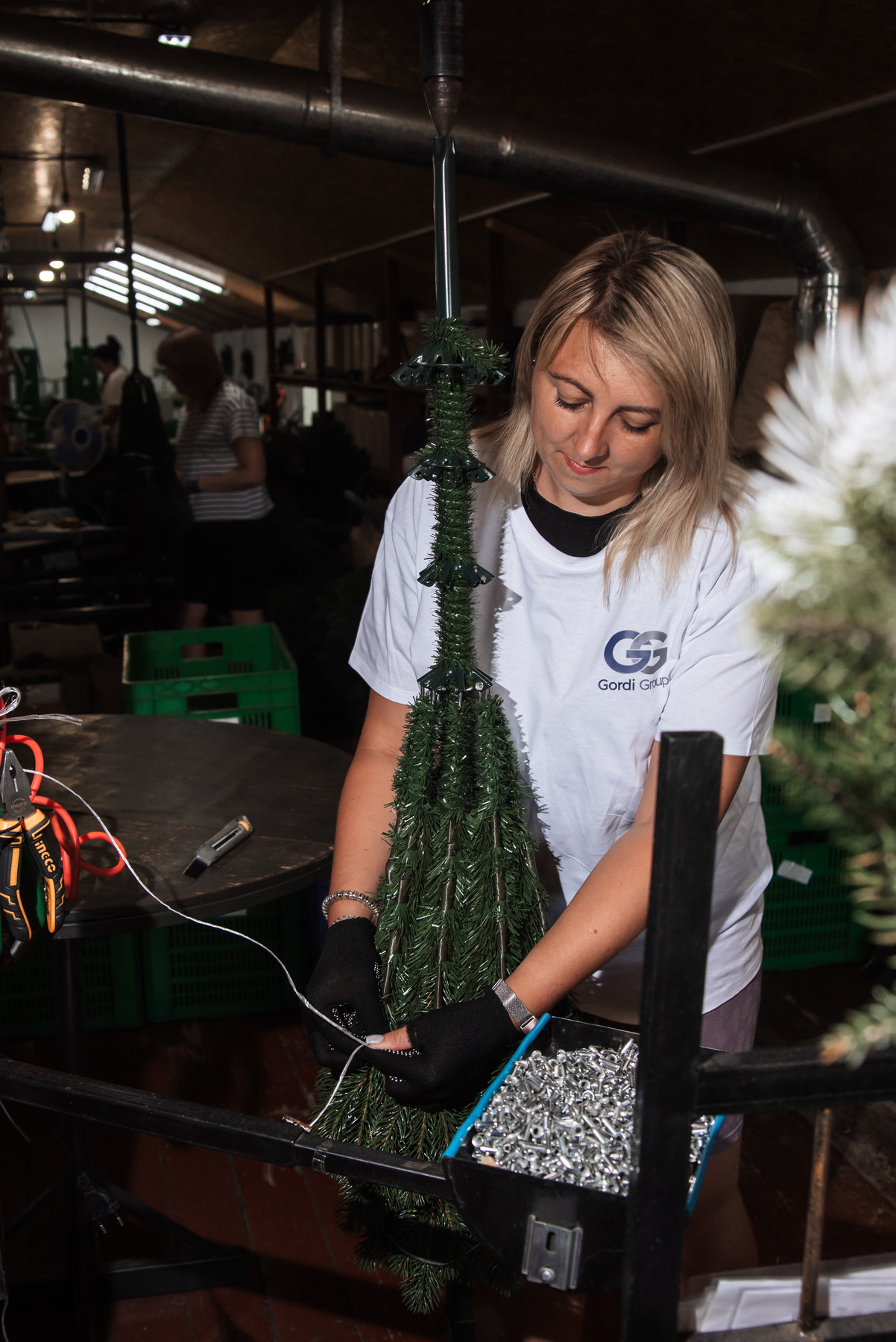
GORDI GROUP manufactures artificial Christmas trees in Ukraine.
Our range includes trees with moulded foliage, PVC foliage and a combination of both. The models vary in shape, density and shades of green.
These photographs show our equipment, workstations and team at work. Here are the main stages of production.
Preparing foliage and branches
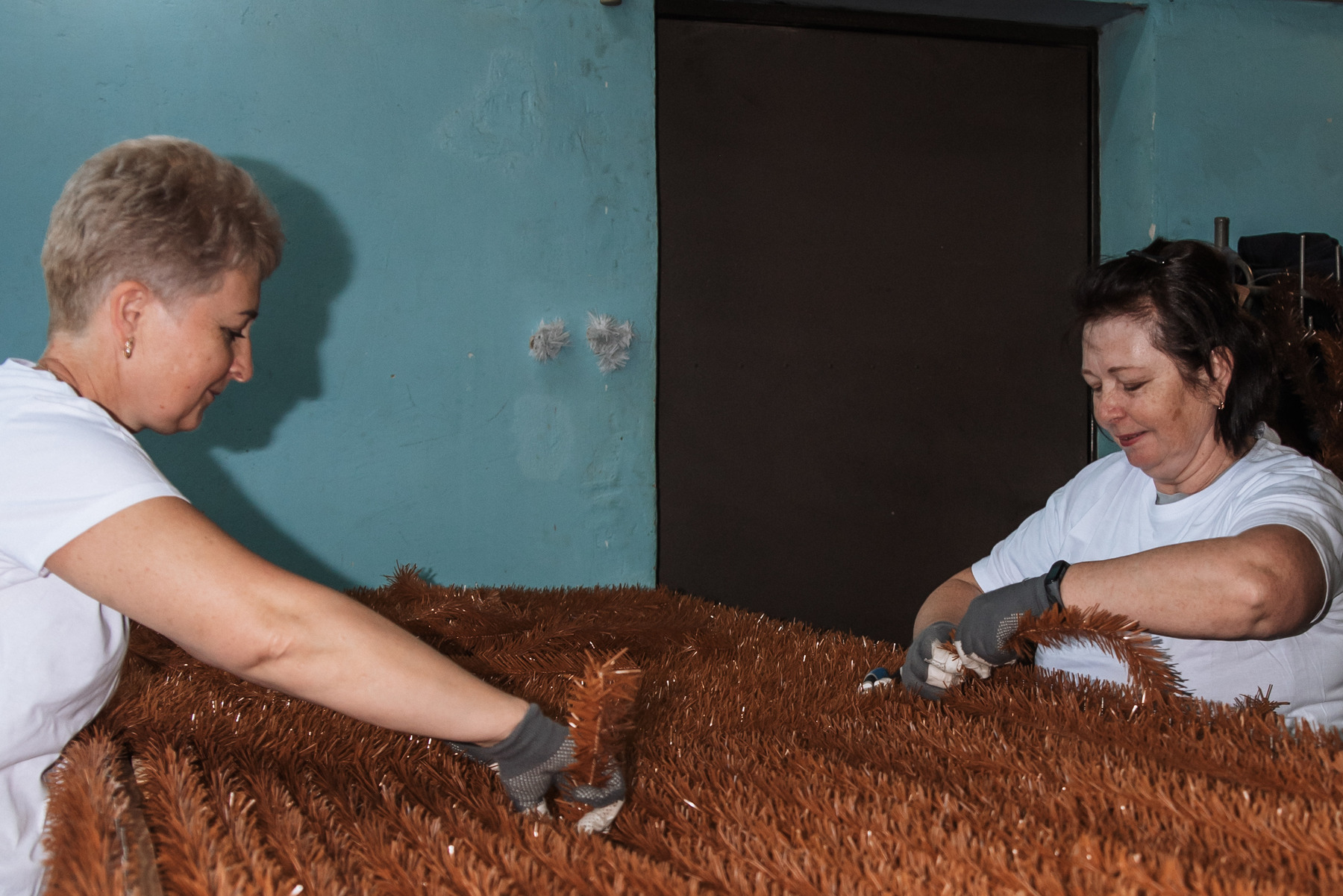
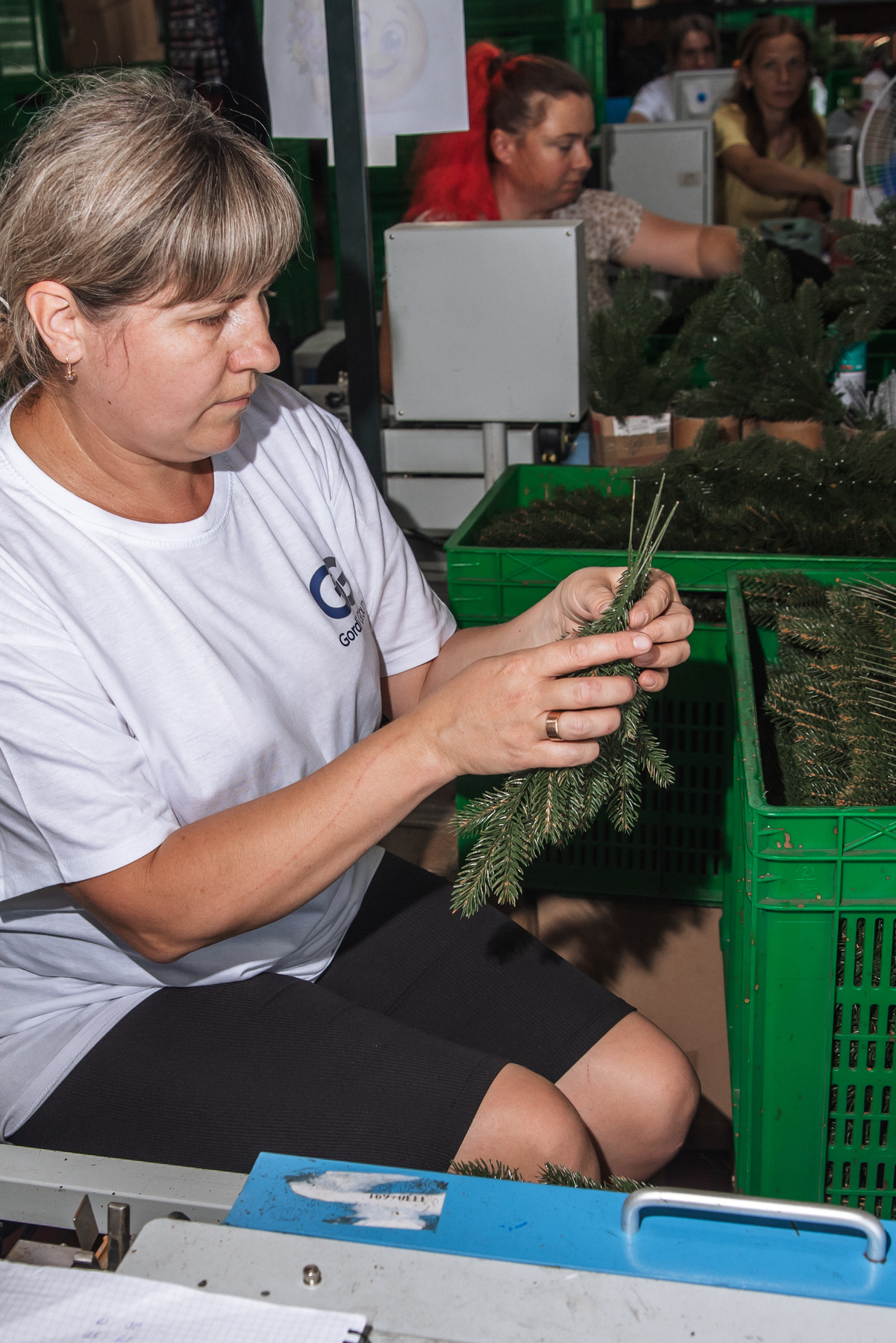
Branches are made for different tree models. The shape and type of foliage depend on the collection. The photographs show moulded branches and branch-making equipment in use.
Moulded foliage
Three-dimensional needles give the branch a defined shape. Close-up photographs show this texture. Check the chosen model’s specifications for the type and proportion of moulded foliage.
PVC foliage
Thin strips of polymer film form soft needles around the branch core. This creates a different texture, which can be compared with a moulded branch in close-up photographs.
Mixed foliage
These models combine moulded branches with PVC foliage. Their proportions and placement vary by model, so look at both the whole crown and the branch details.
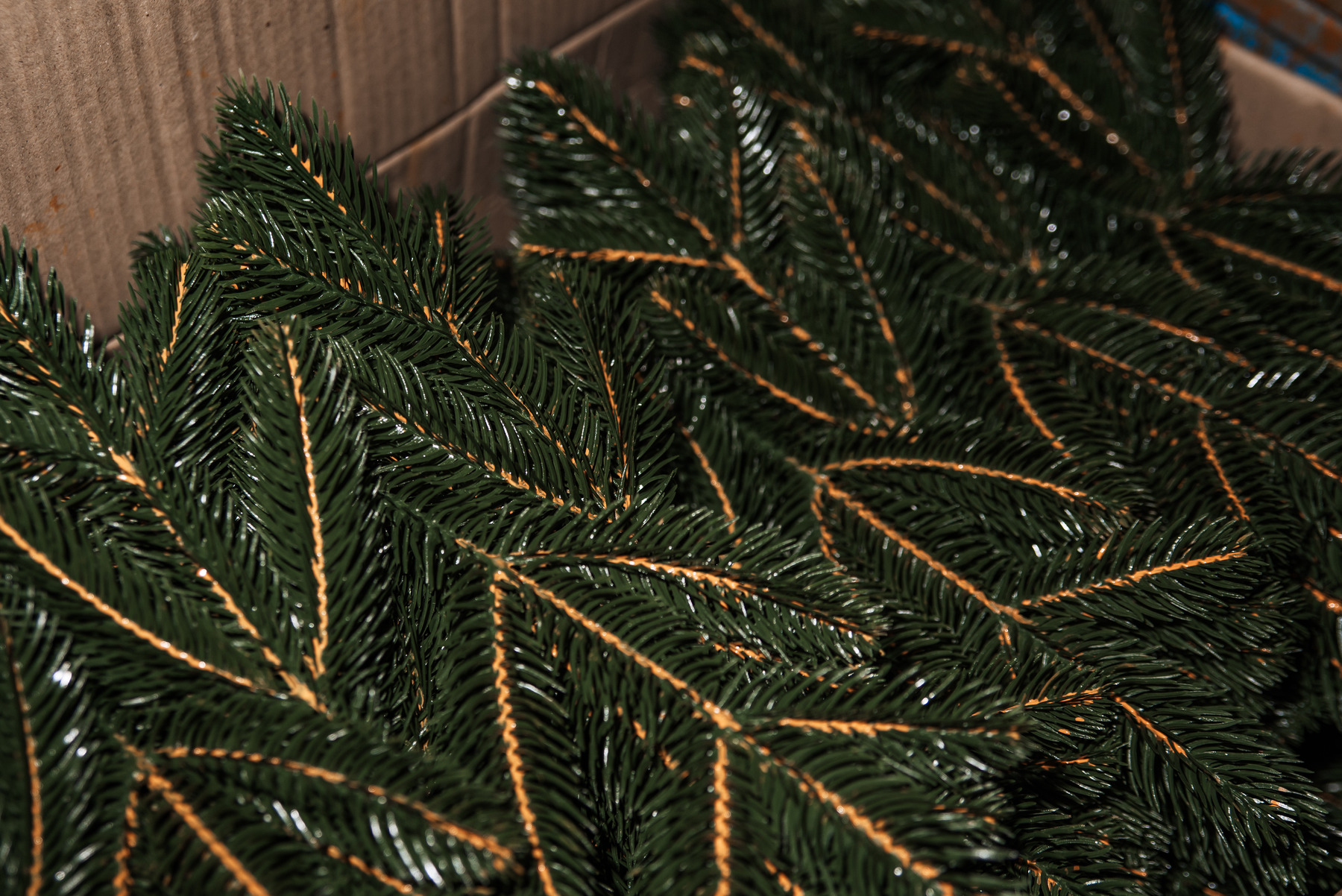

Materials and branch appearance. The shape of the needles determines how a tree looks up close. When comparing models, look at the type of foliage, branch arrangement and overall crown shape.
Making metal components
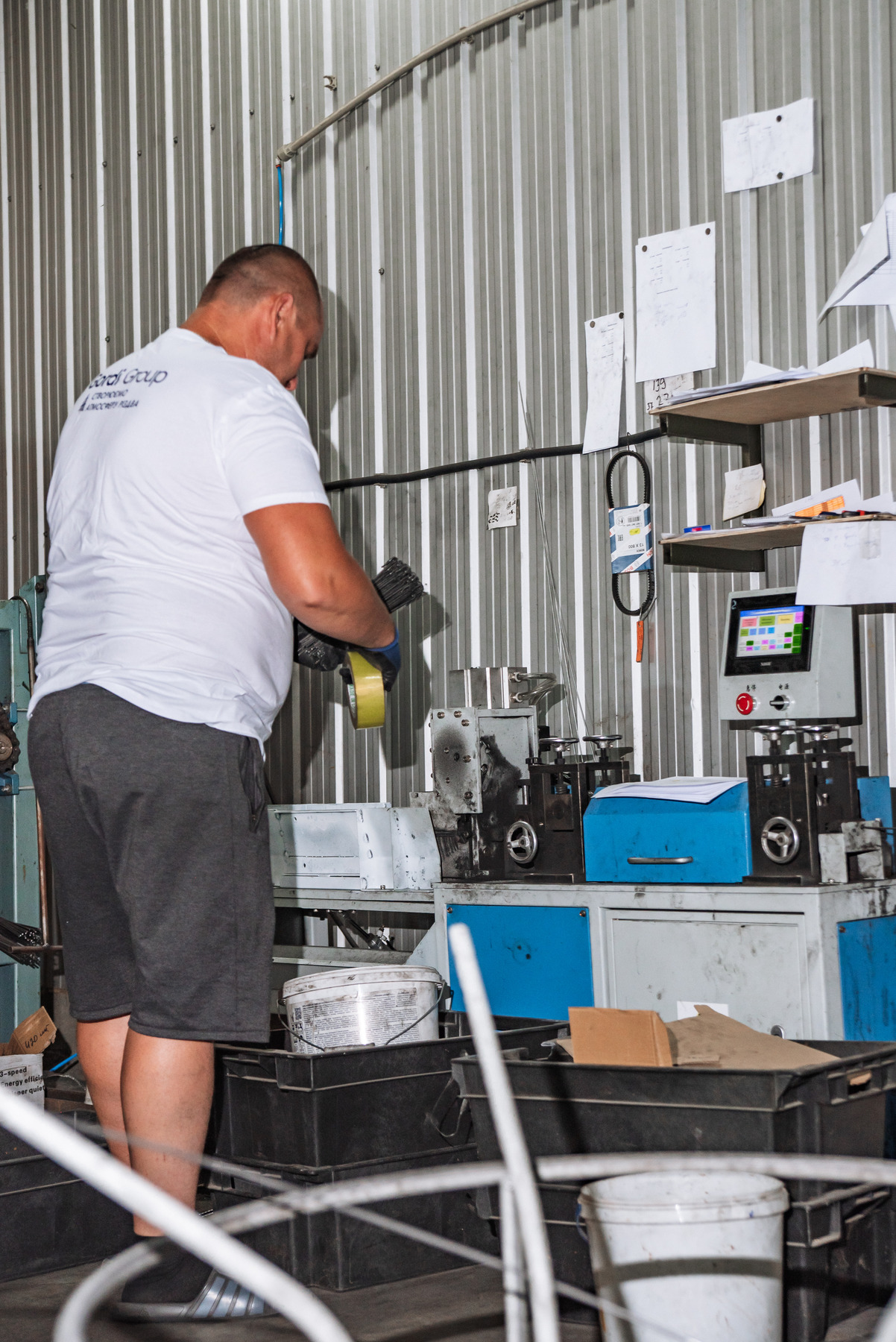
Trunks and fittings are prepared for the trees. Metal components are manufactured using production equipment and then used to assemble the tree structure.
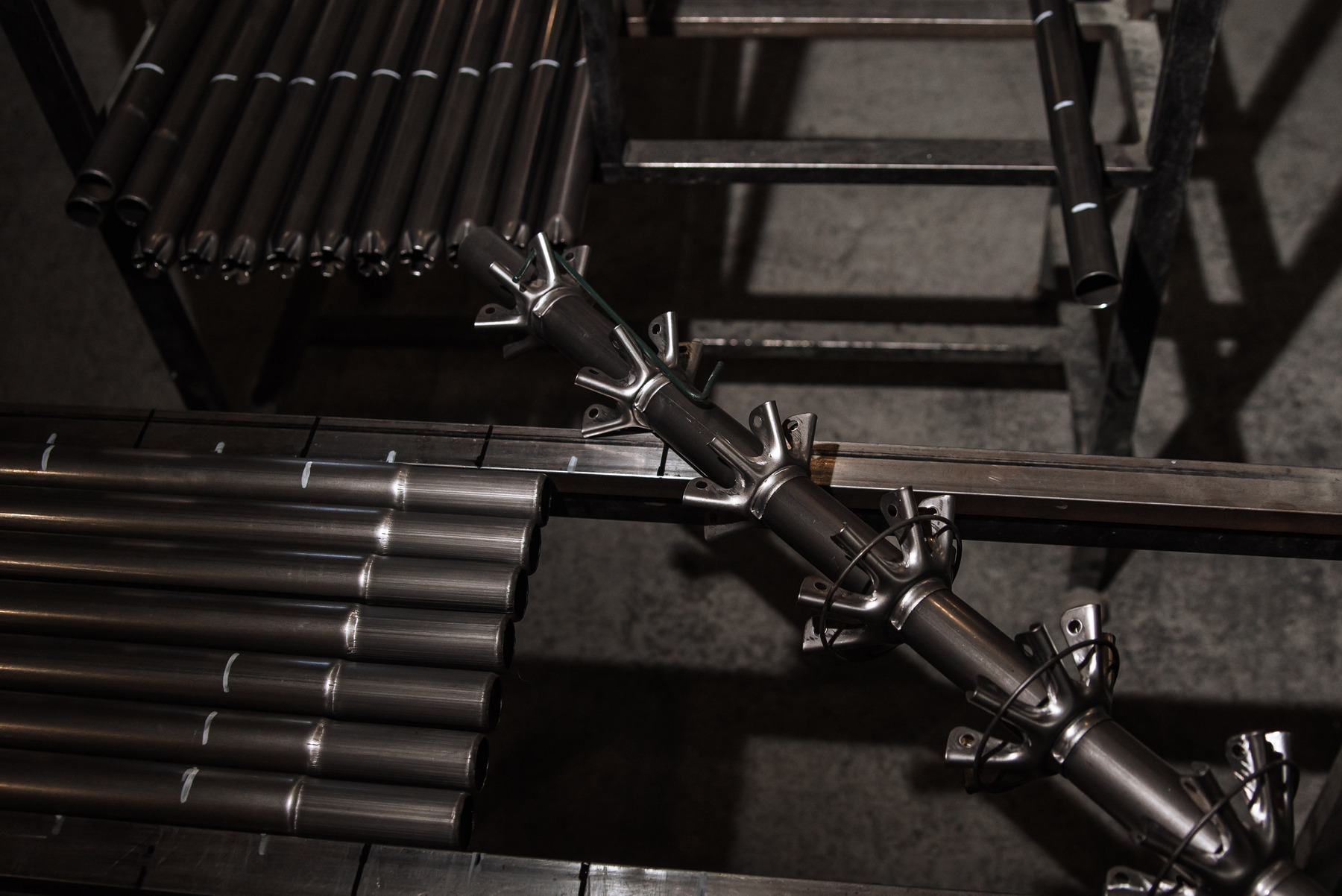
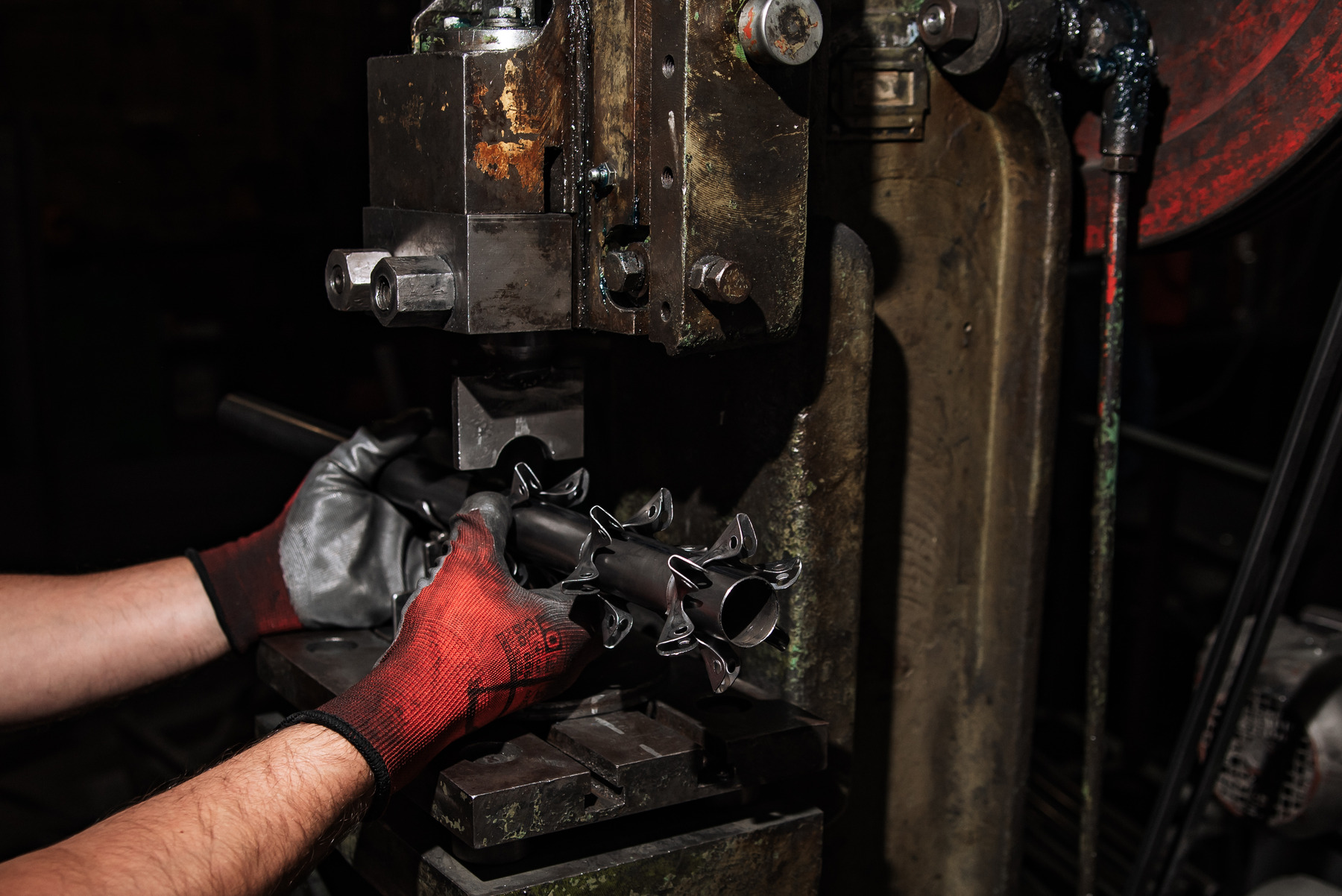
Structure and dimensions. The trunk and fittings determine branch placement. Branch length and the spacing between tiers affect the silhouette and crown diameter. Consider the assembled tree’s width as well as its height when choosing a model.
Assembling the tree
Our team attaches the prepared branches to the trunk. The photographs show the hands-on assembly work and how the branches are fitted.
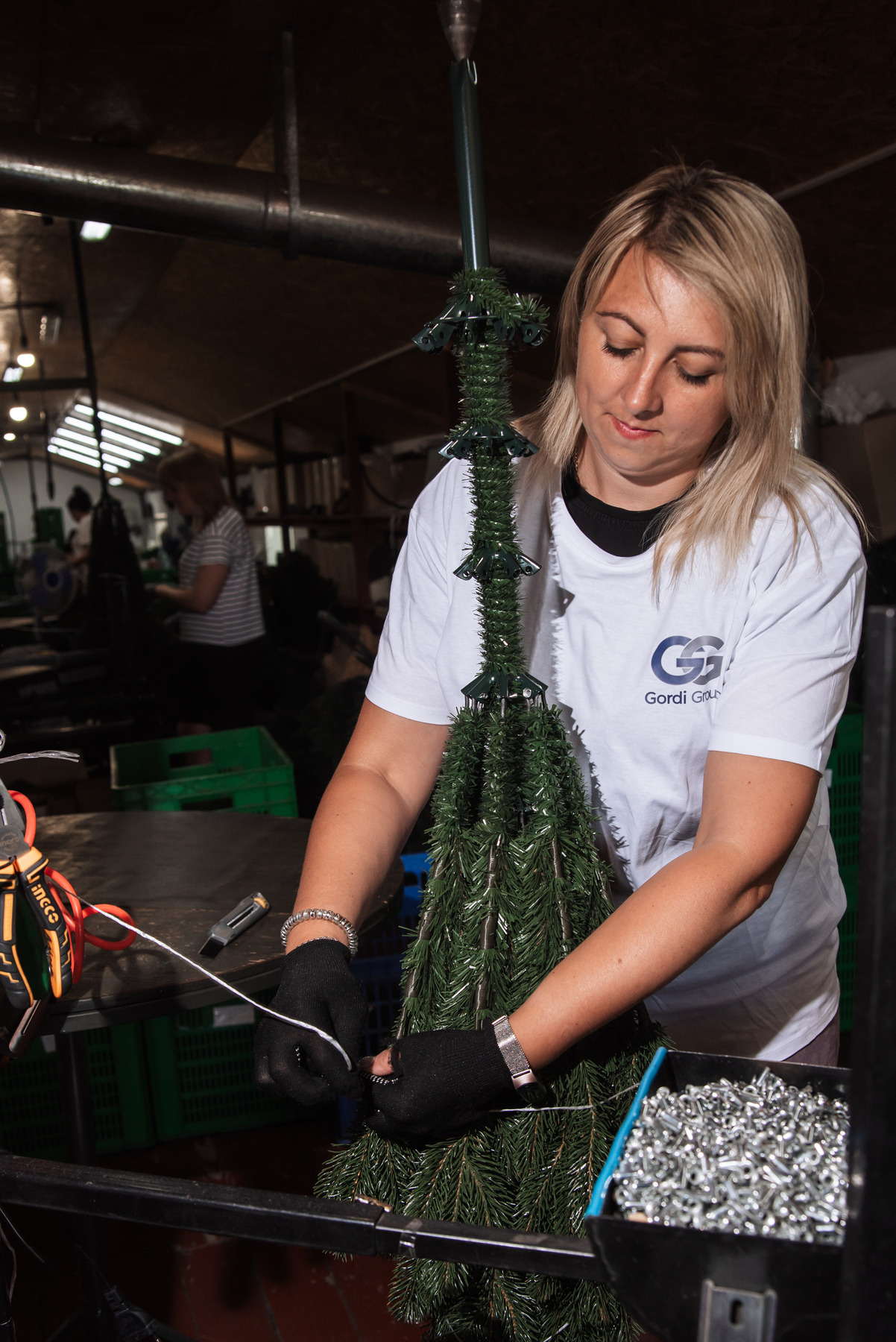
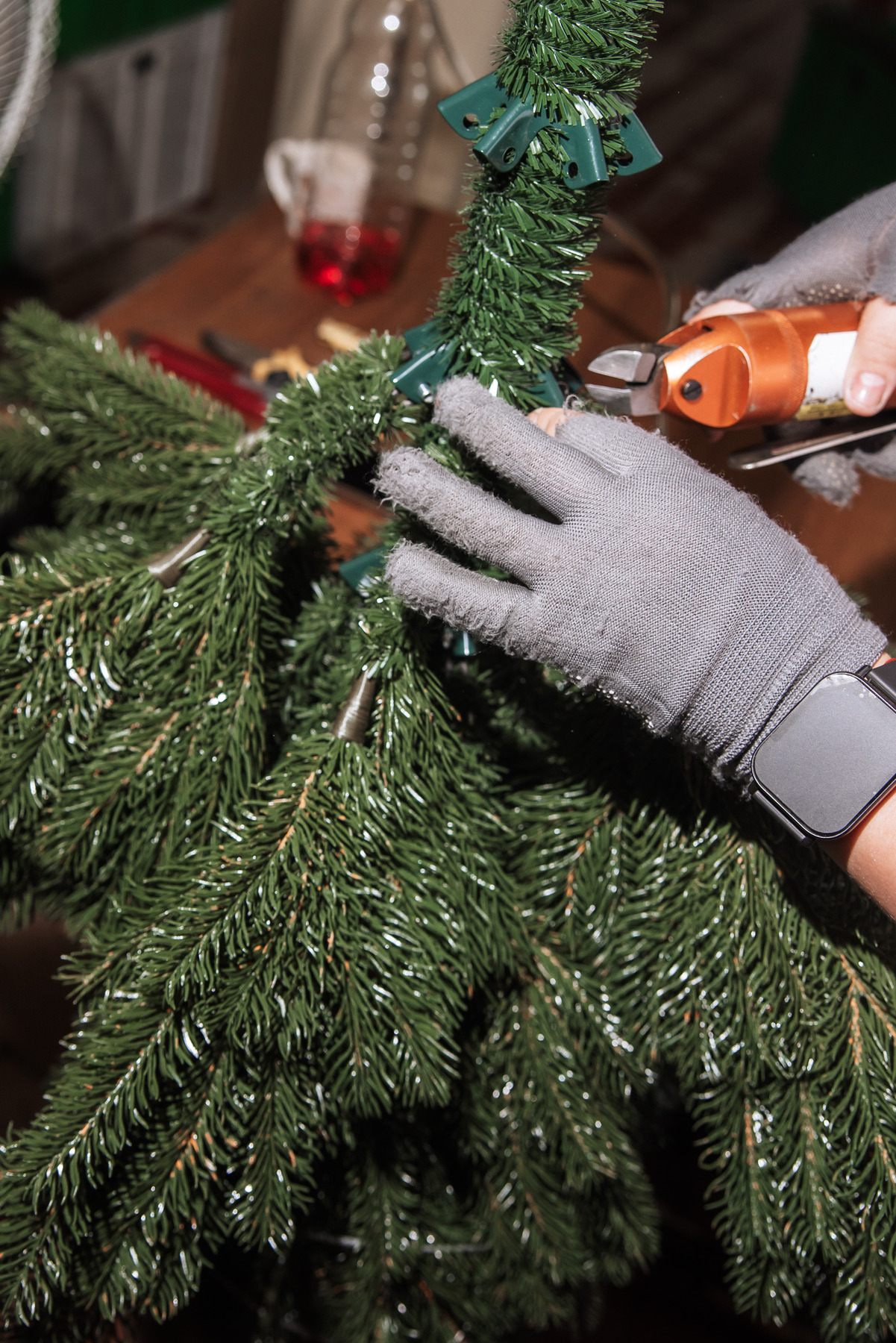
After unpacking. Branches are folded compactly for transport. Once the tree is assembled, shape them according to the model’s instructions. Separate the individual branch tips, starting with the lower tiers, and check the crown from different angles.
Packing and dispatch
Finished trees are packed in boxes and prepared for shipping. The packaged products are stored in the warehouse until they are dispatched to customers and partners.


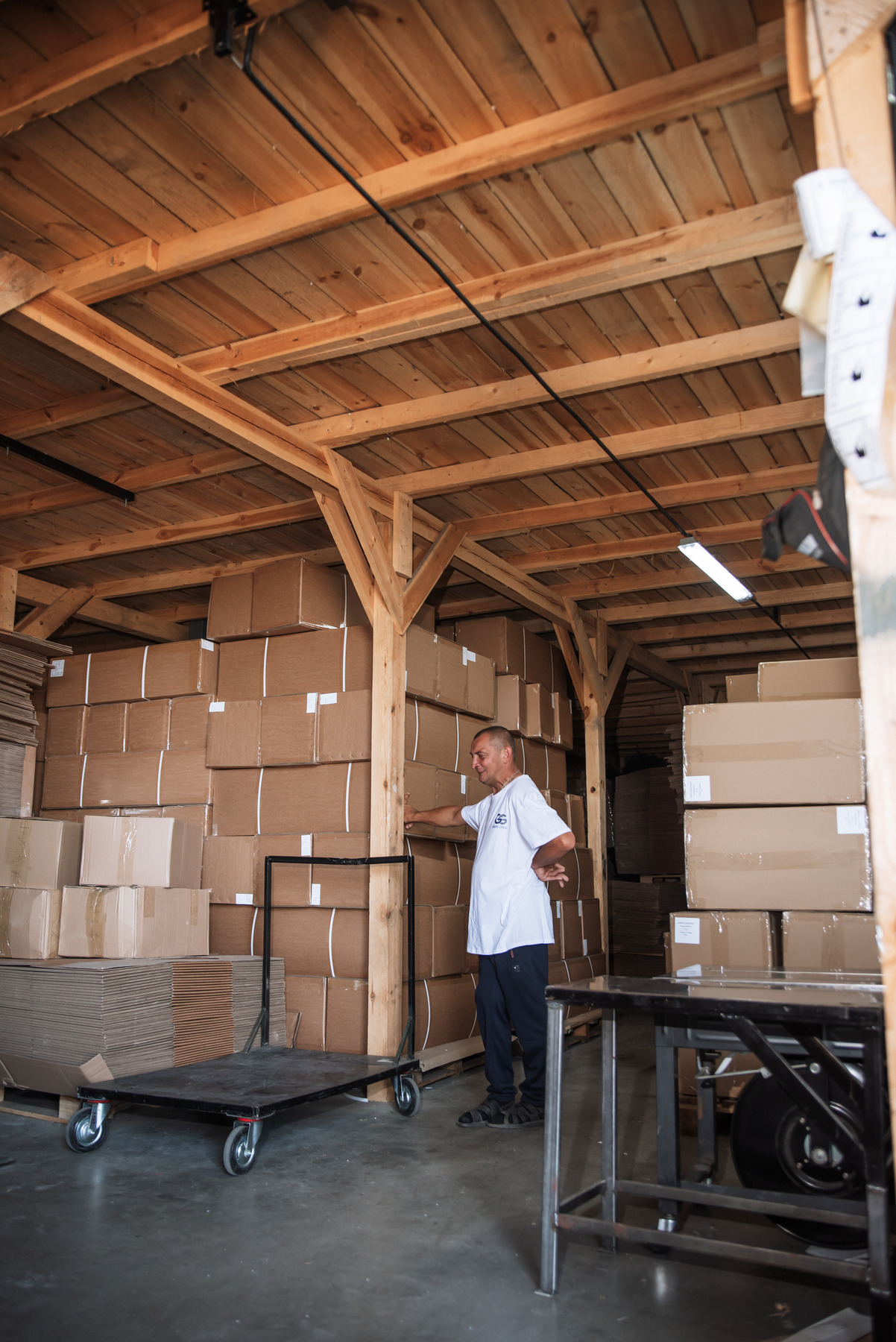
Packing and initial setup. Compact packaging makes a sectional tree easier to transport. On arrival, check the contents against the instructions and keep the box for storage between seasons. Assess the crown’s final fullness after shaping the branches.
What to consider when choosing a tree
These specifications help you compare models and choose a tree that fits your space.
Height and diameter
Compare the model’s dimensions with the available space. Allow room for a tree topper, decorations and a clear passage around the tree.
Foliage type and texture
Look at close-up branch photographs and images of the entire tree. Moulded, PVC and mixed foliage differ in texture and overall appearance.
Crown shape
Compare models by height, width and branch arrangement. Branch tips need to be fully shaped before assessing the tree’s fullness.
How to assess a tree from photographs
Three views are useful when comparing models. Each reveals details that are difficult to assess from a single photograph of the whole tree.
The overall silhouette
Shows the crown’s proportions: its width at the base, taper towards the top and spacing between tiers. This view helps compare the shapes of trees of the same height.
A closer view of a branch
Reveals the branching pattern and arrangement of individual tips. Shaping affects fullness, so compare trees with their branches fully spread out.
A close-up of the foliage
Shows needle shape, texture and the combination of materials. Use several photographs to assess colour, as lighting and screen settings affect its appearance.
Inside our production facility
Workstations, materials and product preparation.



GORDI GROUP Christmas trees
Browse the catalogue for models, sizes and specifications. Retailers and partners can find wholesale terms on our partnership page.